
POWER LINE SAFETY
Accidentally contacting a power line can be extremely dangerous and, in some cases, deadly. Your local electric cooperative is committed to helping keep our communities safe by sharing important power line safety information.
Keep a Safe Distance from Power Lines
Whether you’re working outdoors, landscaping, or spending time with children, always remain alert and keep a safe distance from power lines and electrical equipment used to deliver electricity.
Always Remember To:
- Stay away from power lines, meters, transformers, and electrical boxes
- Never touch or go near a downed power line
- Don’t climb trees located near power lines
- Never fly kites, drones, remote‑control aircraft, or balloons near power lines
- If an object becomes stuck in a power line, contact your local electric cooperative. Never attempt to retrieve it yourself
- Maintain safe clearance from overhead power lines when using ladders or installing items such as antennas
- Avoid touching anything that may be in contact with a downed power line, including vehicles
- Keep children and pets away from electrical hazards
Power Line Hazards and Vehicles
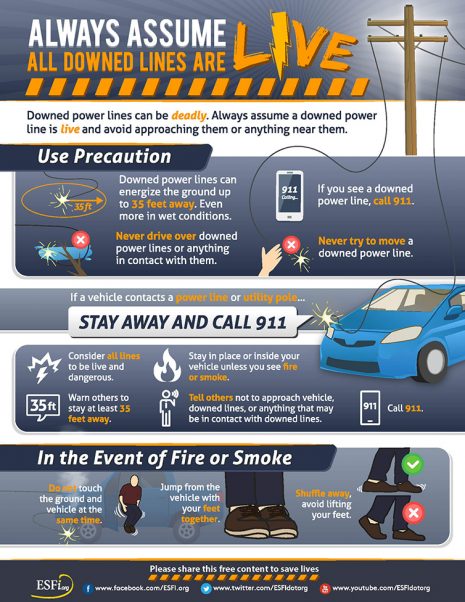
If a power line falls onto a vehicle, stay inside the vehicle.
- Warn others to stay away from the vehicle and the power line
- Call 911 or ask someone nearby to contact emergency services and the electric cooperative
Leaving the Vehicle
The only circumstance in which you should exit a vehicle that is in contact with a downed power line is if the vehicle catches fire. If you must exit:
- Open the door
- Do not step out. You could receive a shock
- Jump clear of the vehicle so your body is completely away from it before touching the ground
- With both feet together, shuffle or “bunny hop” at least 50 feet away
Do not attempt to help others out of the vehicle while standing on the ground.
For all power‑line‑related emergencies, dial 911 immediately or contact your electric utility’s Service Center or Dispatch Office
Watch this short video on power line safety to learn how to recognize hazards and protect yourself, your family, and your community.